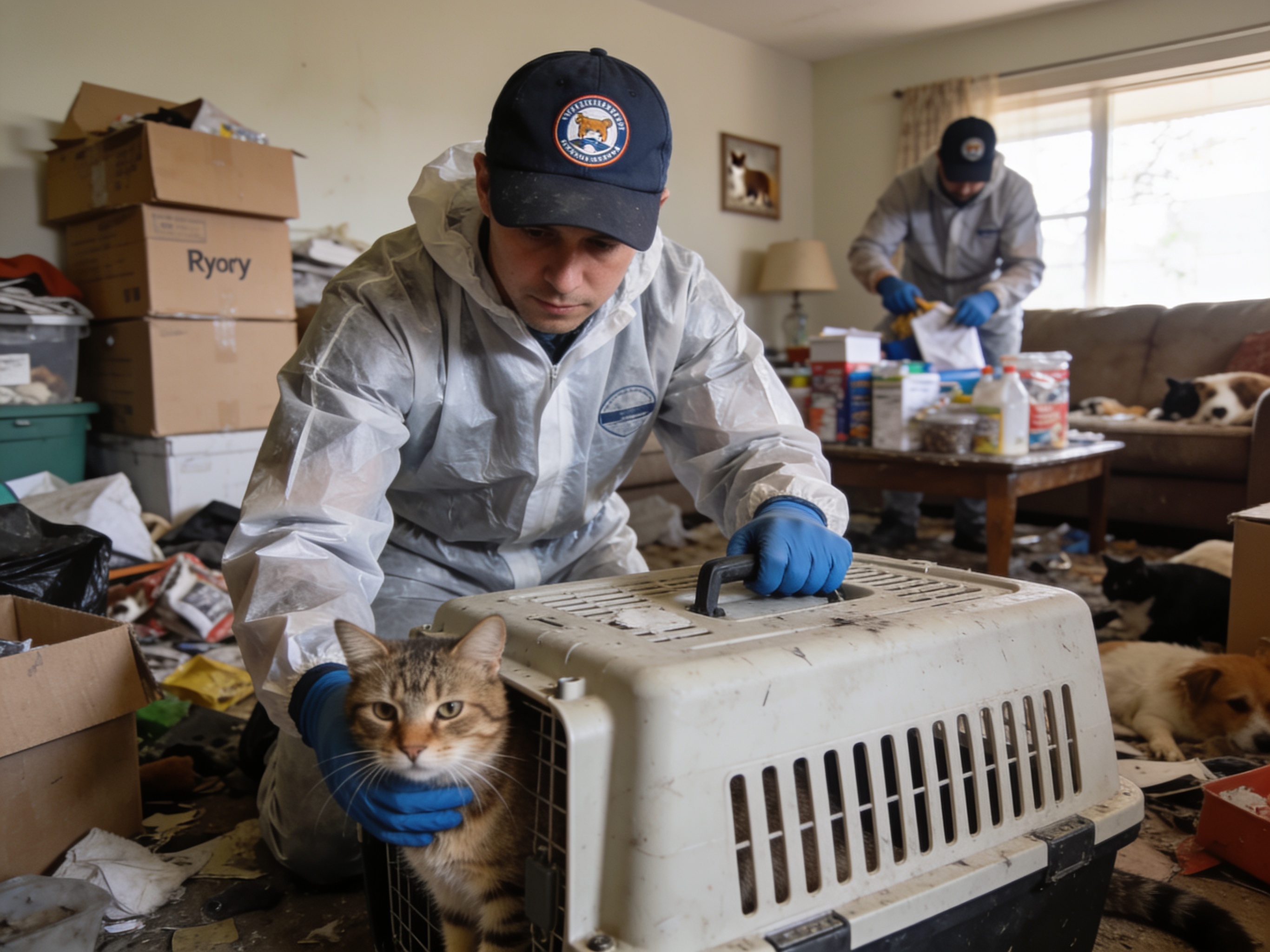
Animal hoarding remediation in Troy often involves properties built in the 1960s through 1980s along Big Beaver and the Rochester Road Corridor. These homes frequently have finished basements and attached garages where waste accumulates, creating deep saturation in concrete and subflooring. Cold winters in Oakland County slow evaporation and allow odors to embed further into insulation and drywall before discovery.
Cleanup crews must address both visible waste and aerosolized pathogens that spread through HVAC systems common in Somerset and Downtown Troy neighborhoods. Proper removal includes negative air machines and antimicrobial treatments that reach behind walls without disturbing neighboring properties near Oakland Mall. Failure to extract saturated materials leads to recurring odors once spring humidity returns.
Animal Hoarding Remediation Company Near You — Choose Your City
Every city below has its own local Animal Hoarding Remediation Company page with coverage details.
Work in Royal Oak and Birmingham-adjacent homes often requires coordination with Oakland County health guidelines on waste disposal. Crews bag and transport materials to approved facilities while protecting hardwood floors and trim typical in Troy Historic Village properties. Every project starts with a site assessment that accounts for square footage, number of affected rooms, and access constraints created by narrow driveways or mature landscaping.
Technician insight
In Troy the thing that catches most people out with animal hoarding remediation is how cold winters let urine soak deeper into concrete slabs and crawl spaces before anyone notices. Homes near the Somerset Collection and along Big Beaver often have older forced-air systems that push odors through the entire house once temperatures rise again.
Basement accumulation in a Rochester Road Corridor home
Waste had built up across the finished basement of a 1970s Troy house. We found saturated carpet pad and drywall that extended into the HVAC return. After removing the contaminated materials and treating the slab, the odor was eliminated and the system passed clearance testing.
Animal Hoarding Remediation Company Services We Offer
✓Animal Waste Removal
Complete extraction of feces, urine, and contaminated bedding from floors, walls, and HVAC systems in Troy homes.
✓Odor Elimination Treatment
Industrial-grade ozone and enzymatic applications that neutralize embedded smells in older Rochester Road Corridor properties.
✓Structural Decontamination
Removal and replacement of saturated drywall, insulation, and subflooring in basements common to 1970s Troy housing stock.
✓Biohazard Surface Cleaning
Disinfection of all hard surfaces and fixtures using EPA-registered agents safe for occupied Oakland County residences.
✓Contents Sorting and Disposal
Item-by-item evaluation and proper disposal of heavily contaminated belongings while preserving salvageable property.
Animal Hoarding Remediation Company Cost in Michigan
| Service | Typical Range | What Affects It |
|---|---|---|
| Single-room remediation | $1,800–$3,200 | Depends on waste volume and subfloor access |
| Whole-home project | $4,500–$9,000 | Includes HVAC cleaning and multiple rooms |
| Odor treatment add-on | $600–$1,200 | Required when odors have reached drywall cavities |
Ranges are typical for Michigan and confirmed with an exact written quote before any work starts.
How it works
- 1
Initial Site Assessment
Technician inspects all affected rooms, measures contamination depth, and notes HVAC pathways in the Troy property.
- 2
Containment Setup
Negative air machines and plastic barriers isolate work zones to prevent cross-contamination to unaffected areas.
- 3
Waste Extraction
Removal of all animal waste and saturated materials followed by bagging for licensed Oakland County disposal.
- 4
Deep Cleaning And Treatment
Application of disinfectants and odor neutralizers to remaining surfaces and cavities.
- 5
Final Verification
Walk-through with homeowner and clearance testing before barriers are removed.
Pricing
Pricing based on inspection of affected square footage, depth of saturation, and disposal volume.