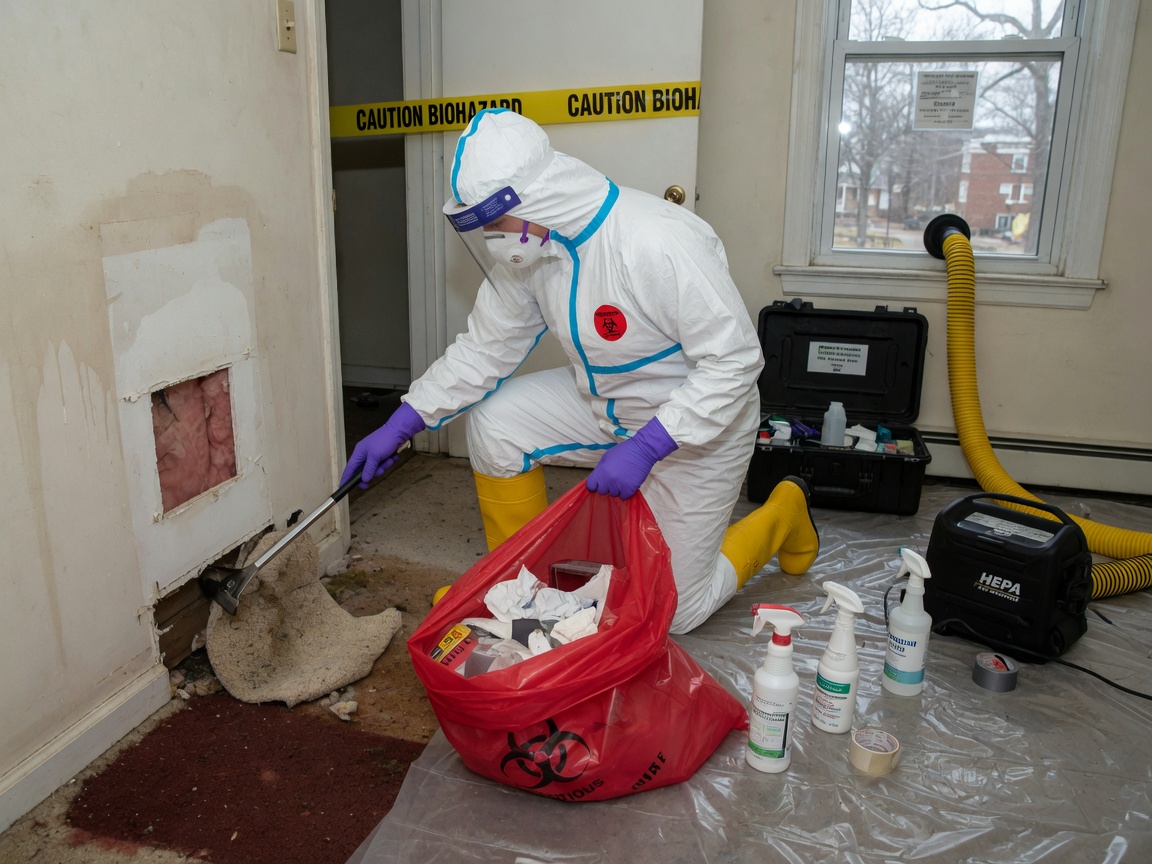
Infectious disease cleanup in Troy often involves older ranch homes and split-levels along the Rochester Road Corridor where tight mechanical rooms and finished basements trap contaminants. Cold winter air combined with indoor heating reduces evaporation rates, so moisture lingers longer in carpet pads and subfloors after a spill or illness event. Crews must run containment barriers earlier than in milder seasons to keep aerosols from reaching HVAC returns that serve multiple levels.
Properties near Somerset Collection and the Troy Historic Village frequently feature mixed-age construction with both original plaster walls and newer drywall additions. This layering creates hidden voids where pathogens can persist behind baseboards and electrical boxes. Technicians use moisture meters and borescopes to locate these pockets before any surface treatment begins, preventing callbacks when spring humidity rises.
Infectious Disease Cleanup Near You — Choose Your City
Every city below has its own local Infectious Disease Cleanup page with coverage details.
Work in neighborhoods such as Big Beaver and near Oakland Mall commonly includes multi-unit buildings where shared hallways and laundry rooms increase cross-contamination risk. Protocols require negative-air machines exhausting to the exterior and sequential zoning so one unit can remain occupied while another is treated. All waste leaves the site in labeled, sealed containers for licensed transport out of Oakland County.
Technician insight
In Troy the thing that catches most people out with infectious disease cleanup is the way cold winter air and forced-air heating push moisture into wall cavities along the Rochester Road Corridor, letting pathogens survive behind baseboards that never fully dry without targeted drying equipment.
Basement illness event near Somerset
A family in a split-level off Big Beaver reported repeated stomach illness after a guest visit. Inspection found dried vomit residue in carpet seams and under baseboards that had aerosolized into the HVAC. Containment was set, affected materials removed, and the system treated with electrostatic disinfection. Follow-up testing cleared the home within 48 hours.
Infectious Disease Cleanup Services We Offer
✓Bloodborne Pathogen Remediation
Full removal and disinfection of blood and bodily fluids from floors, walls, and fixtures in Troy homes and offices.
✓Norovirus Outbreak Cleanup
Targeted surface and air treatment after gastrointestinal illness events in restaurants, schools, and multi-family buildings near Somerset.
✓MRSA and Staph Decontamination
Hospital-grade disinfection of high-touch surfaces and porous materials in residential and commercial spaces along Big Beaver.
✓COVID-19 and Respiratory Virus Cleanup
HEPA filtration, electrostatic spraying, and soft-surface treatment for confirmed or suspected cases in Downtown Troy properties.
✓Biohazard Waste Removal
Segregation, packaging, and transport of contaminated materials from Oakland County sites to approved disposal facilities.
✓Post-Illness Deep Sanitization
Whole-room treatment of kitchens, bathrooms, and bedrooms after extended sickness in Rochester Road Corridor homes.
Infectious Disease Cleanup Cost in Michigan
| Service | Typical Range | What Affects It |
|---|---|---|
| Single-room blood spill | $450–$850 | Increases with carpet or subfloor involvement |
| Whole-home norovirus treatment | $1,200–$2,400 | Higher when multiple bathrooms and HVAC are affected |
| Multi-unit building response | $2,000–$4,500 | Varies by number of units and shared spaces |
| Post-construction pathogen cleanup | $800–$1,600 | Depends on dust load and hidden voids |
Ranges are typical for Michigan and confirmed with an exact written quote before any work starts.
How it works
- 1
Initial Assessment
Technician arrives within hours, evaluates the affected rooms, identifies HVAC pathways, and sets up containment zones.
- 2
Containment And Removal
Barriers and negative air are established; all visible fluids and contaminated materials are bagged and removed from the structure.
- 3
Disinfection Application
EPA-registered disinfectants are applied to non-porous surfaces, followed by dwell times and verification with ATP testing.
- 4
Final Clearance
Air and surface checks confirm levels meet safety standards before barriers come down and the space is returned to use.
Pricing
Cost depends on square footage, contamination depth, and whether HVAC systems require treatment.